
Intangible Assets Financial Accounting
Casinoland Overview Nz
Maio 2, 2022How to Create an App with React js and Node.js
Setembro 29, 2022Intangible Assets Financial Accounting

One way to Bookkeeping for Consultants get there is to focus on companies whose intangible assets are soaring. These juggernauts own some of the world’s most valuable intangible assets, according to the 2022 Brand Finance Global Intangible Finance Tracker (GIFT) report. Originally proposed by Paul Samuelson in 1954, excludability is the extent to which we can restrict a good/service to only paying customers. Besides being non-rivalrous, intangible assets are also non-excludable.
- Firms may include only outright purchase costs in the acquisition cost of an intangible asset; the acquisition cost does not include cost of internal development or self-creation of the asset.
- On a balance sheet, tangible assets are classified as either current assets or non-current (also called “fixed” assets).
- A noncurrent asset typically means it can’t be converted to cash within a year.
- Tangible assets are physical assets that include land, buildings, and machinery and have the ability to be viewed, touched, and used in running a business.
- The tangible assets get depreciated over time, but intangible assets are amortized according to their useful life.
What are identifiable intangible assets?
A legal agreement or contract, on the other hand, can be made for a specific period. An important point in IASB’s definition is that an intangible asset is “non-monetary”. This means that things such as accounts receivable, derivatives and cash in the bank, etc. are not classified as intangible assets.
What Should Tangible Assets on the Balance Sheet Include?
For example, when you own a car, it cannot be used by others at the same time. Marissa Achanzar is part of the sales team at Collective and doubles as a content writer based in Roseville, California. It should be noted that this formula only gives an approximate value. Market value is the current value of the company in the stock market. An intangible object is something that cannot be touched, is hard to describe, or assign an exact value to.
How do intangible assets impact your Balance Sheet?
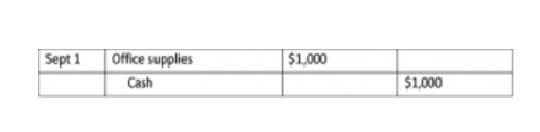
Tangible assets are always listed on a company’s balance sheet; they are considered a part of the company’s total assets and are recorded on a company’s balance sheet. On a balance sheet, tangible assets are classified as either current assets or non-current (also called “fixed” assets). Current assets are short-term assets; they can be converted to cash, sold, or used within one year. They provide liquidity and help a company run its day-to-day operations.
Brand recognition, customer loyalty, and goodwill are all examples of unidentifiable intangible assets. Recognized intangible assets deemed to have indefinite useful lives are not to be amortized. Amortization will however begin when it is determined that the useful life is no longer indefinite. The method of amortization would follow the same rules as intangible assets with finite useful lives. Intangible assets differ from tangible assets, which have physical forms such as buildings or office furniture. For businesses, an intangible asset includes patents, goodwill, and intellectual property.
- Goodwill reflects the premium value a company gains when acquiring another business, encompassing factors like brand reputation, customer loyalty, and employee relations.
- For internally generated assets, such as development costs, stringent criteria must be met, including demonstrating technical feasibility and intention to complete.
- Another common form of valuation is comparing it to the cost of a replacement.
- The goodwill is impaired when the business will not be able to recover the amount recorded in the company’s balance sheet, either through use or through a sale.
- Since these positive factors are not individually quantifiable, when grouped together they constitute goodwill.
Company
Thus, you need to recognize only those items as Intangible Assets on the asset side of your balance sheet meeting both the intangible assets definition and recognition criteria. Accordingly, Certified Public Accountant expenditure incurred on an intangible asset not satisfying the intangible assets definition and recognition criteria is included in Goodwill. This Goodwill is identified at the time of the acquisition of such an asset.

Advantages and Disadvantages of Invisible Assets
Even though intangible assets can’t be seen and held, they provide value for companies as brand names, logos, or intangible assets do not include mailing lists. Unlike intangible assets, the value of tangible assets is easier to determine. The owner may choose to hire an appraiser who determines the fair market value (FMV) of the asset or they may decide to sell the asset for cash. Another common form of valuation is comparing it to the cost of a replacement.
